Our Founding Story
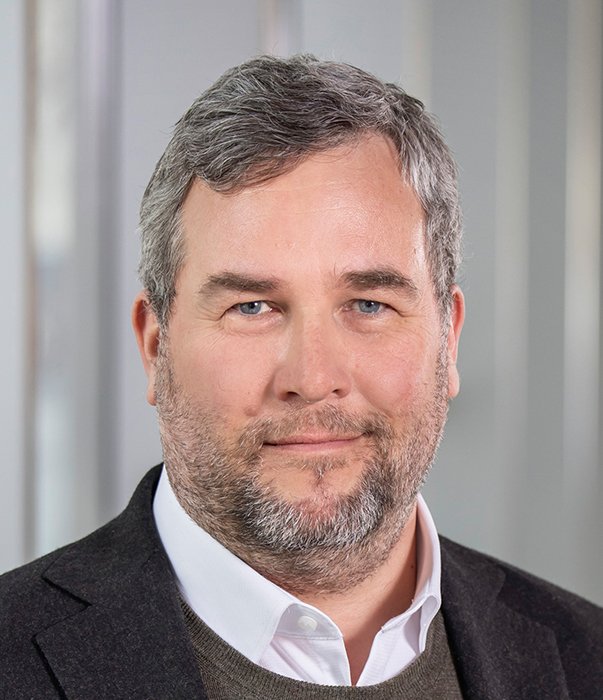
By Samuel Myllykangas, PhD, Co-Founder and CEO of Switchpoint Bio
Switchpoint Bio began with a friendship that started long before the company itself
In the late 2000s, Jason Buenrostro and I worked together at Stanford, developing new targeted sequencing technologies in the years following the Human Genome Project, as next-generation sequencing began transforming research. Our days, and often nights, in the lab were driven by one question: what becomes possible when we can read human biology with a precision and scale that had never existed before?
Somewhere between the long experiments and the harder problems, we also became close friends. The kind of friendship that outlasts a lab bench or a shared employer.
After Stanford, our paths diverged. Jason stayed in academia, pioneering new approaches in epigenetics and single-cell genomics, work that would later earn him a MacArthur Fellowship. I moved into entrepreneurship and diagnostics, building and scaling genomic testing platforms that helped families and clinicians diagnose rare monogenic diseases faster than ever before.
In a way, we had both stayed close to the same revolution, just from different sides. Jason was advancing science. I was translating genomic insight into real-world use.
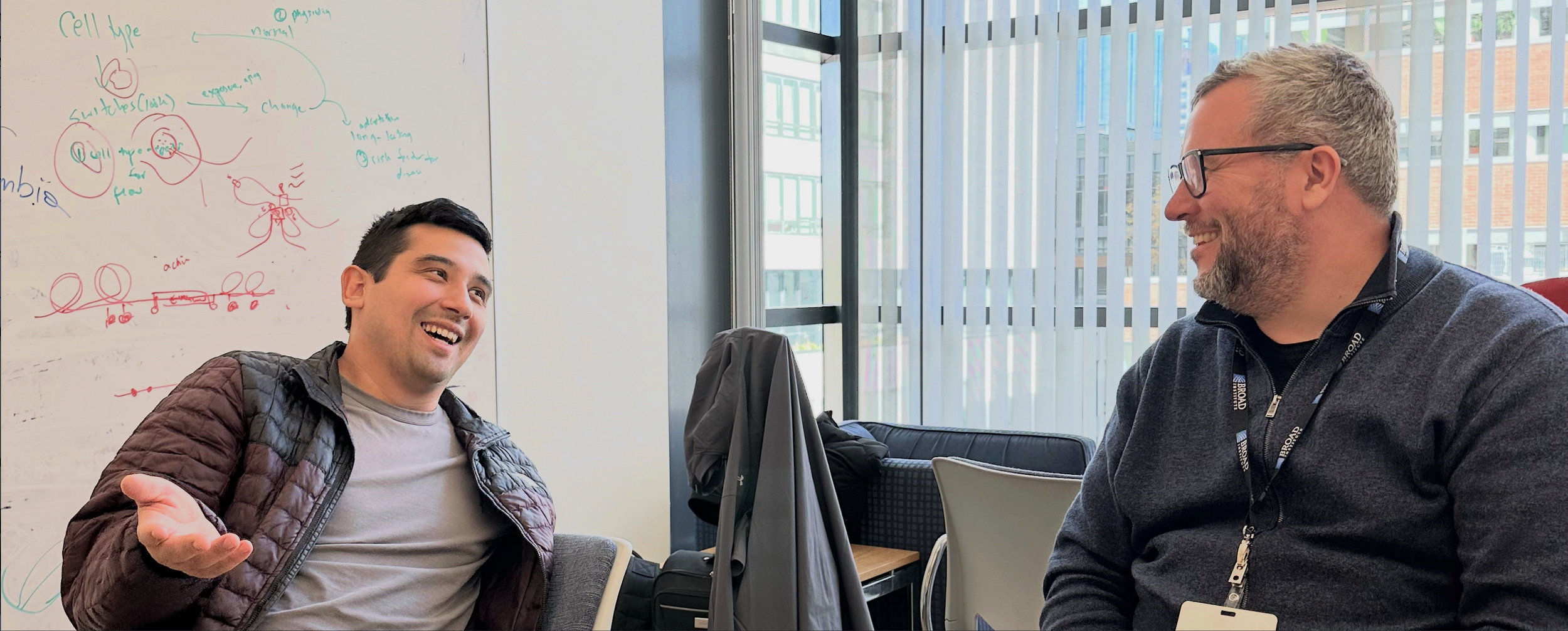
Switchpoint Bio co-founders, Professor Jason Buenrostro and Dr. Samuel Myllykangas. Friends and colleagues.
A conversation in Cambridge
A few years ago, we met again in Cambridge, Massachusetts, and spent an afternoon walking around the Harvard campus. There was no agenda and no company plan, just two old friends talking about science, and about what we wanted to do with the years ahead.
As the conversation unfolded, we realized we had both arrived at the same tension. Jason was seeing extraordinary breakthroughs emerge from his lab, but too many weren’t reaching patients fast enough. I had seen genetics transform rare disease diagnosis, but its impact on the much larger population living with chronic disease had been limited.
Genetics tells us a great deal about inherited risk, but inherited risk is only part of the story. It doesn’t fully explain how biology changes over time, what’s happening in a patient’s body today, or when the right moment to intervene might be.
The signal beyond genetics
As Jason described the latest advances in epigenetics, something clicked. The field reminded us of genetics fifteen years earlier: moving fast, full of new technology and discovery, but with its most important applications still undefined.
What made epigenetics different was its dynamism. Our genome is largely fixed. It tells us what we inherited. The epigenome is different: it changes as biology changes, carrying molecular traces of what our cells have experienced, including disease, environmental exposure, treatment and aging.
That suggested a new possibility: what if we could read not just what a person inherited, but a molecular record of what their biology had experienced? And what if part of that record was accessible through blood?
Blood gives us access to immune cells, the body’s circulating sensors that detect infection, injury and other signals from tissues, and adjust their behavior in response. Their epigenomes could carry a record of experienced human biology. For chronic disease, which develops gradually, long before it becomes visible, and continues changing through treatment, that record could matter enormously.
The question was whether we could learn to read that record, repeatedly, meaningfully and at scale.
This idea stayed with me. I had always believed that understanding the human genome would be one of the defining scientific challenges of my life, but I’d also hoped we could move beyond diagnosis toward prevention and precise intervention. This felt like a path to doing that!
Building the Team
By the end of that afternoon, Jason and I realized we were circling the same question: how could we bridge breakthrough science and real-world impact? He had spent years uncovering previously inaccessible layers of cellular biology. I had spent years building platforms that brought complex genomic technology into practical use. Together, the pieces formed something neither of us would have built alone. That was the beginning of Switchpoint Bio.
Realizing the opportunity meant assembling a team spanning genomics, population-scale human data, computational biology and AI, clinical medicine and drug development. So we turned to people we already knew and trusted.
Jussi Paananen and I had built a company together before, and I knew he could combine biological insight with technology and computation the way this idea demanded. Mitja Kurki brought deep expertise in human genetics and the biology of complex disease, sharpened by years of building a population-scale pharma data platforms. Niilo Färkkilä brought a drug developer's instinct from biopharma, helping to connect emerging science to the realities of bringing new treatments to patients. Each of us arrived from a different direction, but we kept landing on the same conviction: this was worth building, and worth building carefully.
That became the founding team of Switchpoint Bio, a group that wanted to do great science in service of something bigger, and to build the kind of company we’d want to spend years building: ambitious and rigorous, but also curious, collaborative and low-ego.
What really brought us together was a simple belief: this work could make a genuine difference for people, everywhere!
From insight to platform
Turning the idea into something useful meant more than measuring a handful of biomarkers in a small number of samples. We needed to read rich epigenomic information from ordinary blood draws, across large numbers of people, over time.
That is what Switchpoint Bio builds: scalable epigenomic profiling combined with computational biology and AI. We generate rich epigenomic profiles from a single blood draw, then interpret the many layers of biological information encoded within them. A single sample tells us about one person’s biology at one moment; across thousands of people, before and after diagnosis, through treatment and response, those records become a dataset for learning how human biology changes. That is where AI matters most. Correlation is a starting point, not the endpoint: the goal is to connect patterns in the epigenomic record to the underlying biology – what is driving disease, why patients differ, what changes when a treatment works.
We are starting in drug development, where better biological evidence can make an immediate difference: What biology is actually driving a disease? Which patients have the biology a therapy is designed to change? Is treatment changing that biology in the intended way? Answering those questions more precisely could change how medicines are discovered, developed and tested.
But we believe the implications extend further. If we can learn to read the molecular record of human biology across people and over time, we may eventually recognize biological change before disease is fully established, monitor how it progresses, and identify the moments when intervention has the greatest chance of changing its course, opening a path from drug development toward earlier detection and more preventive medicine.
For me, that possibility closes a circle that began long before Switchpoint Bio. Genetics gave us an extraordinary ability to understand the biological hand we are dealt; my first chapter in genomics was about using that information to diagnose disease. The next question is different: what if we could learn to read what happens to our biology throughout life? Not just what we inherited, but what it has experienced, how it is changing, and whether we can recognize that change early enough to alter what happens next.
We believe some of the most important opportunities in medicine lie in finding these switchpoints, the moments when understanding biology gives us the chance to change its course.
Biology leaves a record in blood — We founded Switchpoint Bio to learn how to read it.