
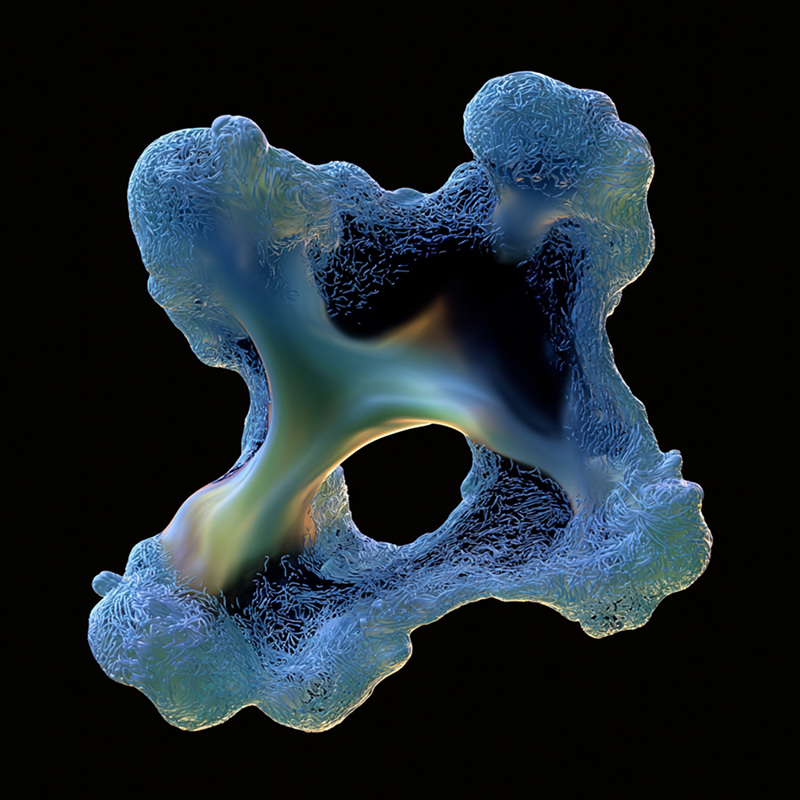
Many layers of biology. One platform.
We sequence cellular biology, mine it with machine learning, and turn it into evidence with AI — for biopharma and clinical research teams.
THE FOUR PARTS OF OUR PLATFORM
How biology becomes evidence
The Assay
We sequence DNA methylation at single-base resolution using modern, sequence-preserving chemistry — gentle enough for precious, low-input, and archived material, and optionally blended with whole-genome sequencing for broader genetic context. Ultra-deep, targeted coverage means one blood draw yields genetics, methylation, and every layer of biology inferred from them, all from a single assay.
From sample to signal
The Reference Atlas
A growing, population-scale atlas of samples and patients, built from biobank and disease cohorts with clinical linkage. It captures the real distributions of immune states, disease substates, and biological trajectories across health and disease — so every new sample is read against a population, not in isolation, and even a small study inherits that larger context.
Context for every sample
The Knowledge Base
A curated map of the biology behind the signal, connecting methylation patterns to the genes they regulate, the pathways those genes act in, and the diseases they've been linked to — grounded in decades of public research and extended with our own curation and proprietary data. Where the atlas shows something is different, the knowledge base explains why it matters.
What the signals mean
The Interpretation Engine
No single model can capture biology this complex, so a family of specialized models, grounded in the Reference Atlas, resolves immune composition, disease subtype, biological age and trajectory, and the other layers each sample carries. AI then reasons across all of it against the Knowledge Base, turning separate signals into biomarkers, patient segments, and mechanism insight — each traceable to the genes and pathways behind it.
Many signals, one story
HOW IT WORKS
From blood to decision — here's how
Follow a single sample through the Switchpoint Bio platform — from the biology in blood to a decision you can stand behind.
Start with Existing or New Blood Samples
01Biology writes its record in blood — archived or freshly collected, a handful of samples or tens of thousands, from real-world populations or controlled clinical trials.
Sequence the Methylome
Ultra-deep targeted sequencing reads the most informative regions of the DNA methylome at high resolution — optionally blended with whole-genome sequencing for genome-wide context, in a single assay.
02Uncover the Biological Layers
One sample, many layers of biology — genetics and methylation resolved directly, immune state, disease signatures, environmental exposures, biological age and many others inferred from them.
03Interpret Signal into Meaning
An atlas of what biology looks like and a knowledge base of what it means, reasoned by our computational models to turn raw data into biological insight.
04Deliver Answers that Accelerate the Pipeline
05Insight and answers that decision makers can act on — from biomarker discovery to patient stratification and response monitoring across the pipeline.
START WITH EXISTING OR NEW BLOOD SAMPLES
Standard samples, any scale, any stage
Work with the samples you already have
Archived and biobanked blood — or extracted DNA — from completed and ongoing trials can be profiled directly. Ask new questions of studies you've already run, without collecting a single new sample. For many partners, this is the fastest path to first insight, with no prospective study required.
Build into a new study
For prospective programs, the assay slots into standard blood collection, including longitudinal sampling across baseline, on-treatment, and follow-up timepoints — so you can track how a patient's biology changes as therapy unfolds. It's the same platform whether you're mining what you've already collected or designing what comes next.
From a handful of samples to tens of thousands
The platform scales from focused pilots to population-scale cohorts. And because every sample is read against the Reference Atlas, even small studies inherit the context of a much larger population — so a modest set of samples yields grounded, interpretable signal instead of sitting in isolation.
Flexible sample formats
We work from whole blood, buffy coat, PBMCs, or already-extracted genomic DNA — standard formats most biobanks already have on hand — with modest input requirements and no unusual collection or storage needed. Sample type and handling still matter, so we confirm requirements and suitability with you up front.
PRECISION EPIGENOMICS
Sequence the methylome
Read the methylome
in high definition
We read DNA methylation in bulk at single-base resolution using modern, sequence-preserving chemistry — an approach that maps methylation without degrading the DNA it reads. Our method is gentle enough to read precious, low-input and archived material.
Genome-wide context,
when you need it
The targeted core can be blended with whole-genome sequencing, adding genetic variation and a broad genome-wide backdrop — so focused depth and wide context come from the same run.
Depth where
it matters
We sequence ultra-deep — focusing on the regions we've identified as tied to real downstream biology, at hundreds- to thousand-fold coverage. Because we read where the biological meaning is, we detect subtle differences and rare cell populations that shallower methods and fixed arrays can't reach — and because sequencing stays focused, the same assay scales efficiently to very large cohorts.
One sample,
many readouts
Our single assay measures genetics and DNA methylation, and infers multiple layers of data from the same reads. What might otherwise take several separate assays, on several sample types, comes from one tube of blood or banked DNA — one dataset, not several to reconcile.
UNCOVER THE BIOLOGICAL LAYERS
What we read from a single blood draw
Precision epigenomics at scale — one assay, many layers of biology. Circulating immune cells act as a systemic sensor, carrying a molecular record of the whole body in every blood draw.
-
The genome-wide DNA methylation landscape— the direct molecular readout from which other layers are derived.
-
The composition and activation state of circulating immune cells, resolved directly from methylation — no cell sorting required.
-
Epigenomic patterns that separate disease from health, and one disease state from another — turning the biological record into insight across many areas of medicine.
-
The molecular scars left by prior diseases, infections, chronic inflammation and comorbidities — the biological memory of what a body has already been through.
-
The molecular imprint left by everything a body encounters — smoking, diet, alcohol, activity, pollution and more — accumulated across a lifetime in the methylome.
-
Epigenomic clocks that measure how fast a body and immune system is actually aging, often diverging from age in years.
-
Which regulatory programs are switched on or off across the genome — read from methylation at promoters, enhancers, insulators and other regulatory elements.
-
Emerging somatic mutations in blood-cell lineages — an early signal of hematological and cardiovascular risk.
-
The inherited variation and polygenic risk written into your DNA sequence — read from the same molecules as methylation, in a single assay.
Measuring biology is only the first step.
The harder problem is turning billions of molecular signals into answers our partners can act on.

Biology leaves a record in blood. Switchpoint Bio reads it at scale.
Disease, environmental exposures and treatments flip epigenetic switches on and off in our cells. In immune-related disease, these switchpoints explain why patients progress — and respond to treatment — so differently.
We read them from a standard blood draw, giving biopharma and clinical research teams a clear view of disease mechanism and better trial and treatment decisions.
-
Reveal blood-based epigenomic signatures that define known and novel disease states and the cellular mechanisms driving them.
-
Identify biologically defined patient groups to enrich trials and sharpen clinical readouts.
-
Track cellular state changes during treatment to understand response, resistance, and mechanism of action.